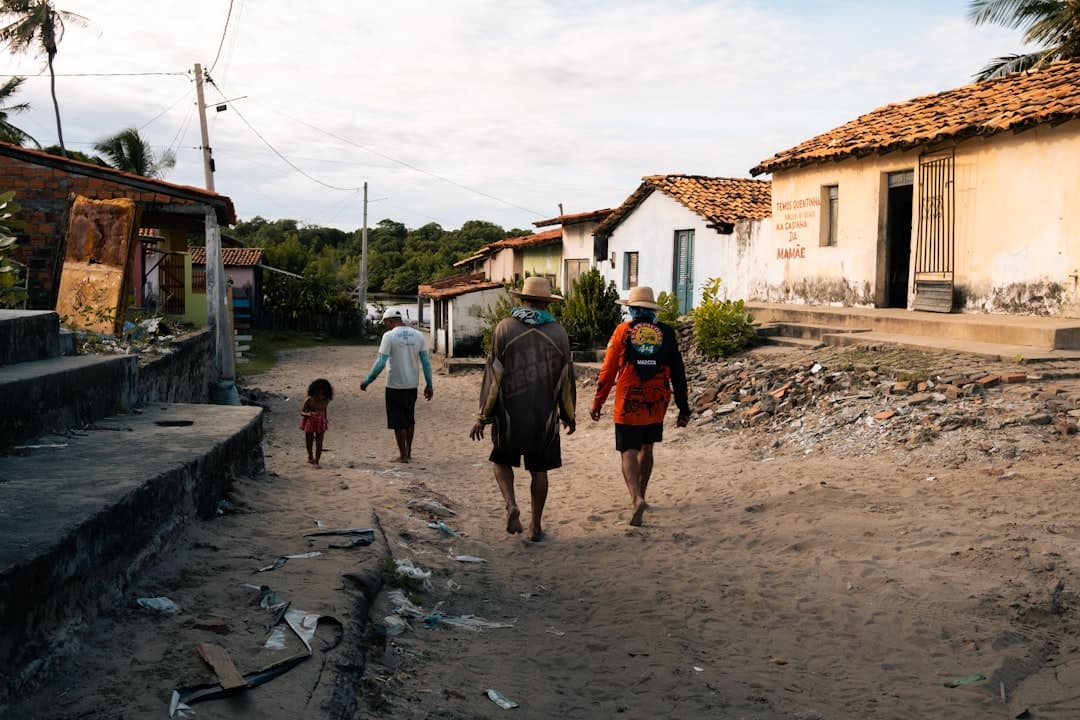
Across Brazil's sprawling metropolitan areas — from São Paulo and Rio de Janeiro to Fortaleza and Manaus — a persistent divide in healthcare access has drawn renewed attention from public health institutions and urban planners. Residents of peripheral neighborhoods, known locally as periferias, face measurably different conditions in accessing primary care, specialist services, and hospital infrastructure compared to those in more centrally located, higher-income districts.
A Structural Gap with Deep Roots
The inequality reflects decades of uneven urban development. Brazil's rapid urbanization during the latter half of the twentieth century concentrated populations in informal settlements on city outskirts, areas that historically received fewer public investments in sanitation, transportation, and healthcare facilities. The Unified Health System — known by its Portuguese acronym SUS — was established in the 1988 constitution with universal coverage as a foundational principle, yet geographic and socioeconomic barriers have continued to limit equitable access in practice.
Disparities in Infrastructure and Workforce Distribution
Health facilities, including basic care units called Unidades Básicas de Saúde, are distributed unevenly across urban territories. Peripheral zones often record higher patient-to-provider ratios and longer travel distances to specialized care. Medical professionals have historically concentrated in urban cores where private healthcare markets are stronger, a pattern documented in studies by the Oswaldo Cruz Foundation (Fiocruz) and the Brazilian Institute of Geography and Statistics (IBGE).
Policy Responses Under Examination
Federal and municipal governments have introduced various programmatic responses over the years, among them the Family Health Strategy (Estratégia Saúde da Família), which deploys interdisciplinary teams to community-level clinics with an emphasis on primary care. Evaluations of such programs have shown variable results depending on local administrative capacity and funding continuity.
A Challenge Shared Across the Region
Brazil's urban health inequality mirrors broader patterns observed across Latin America, where rapid urbanization has outpaced the expansion of social infrastructure. Research institutions continue to analyze correlations between residential segregation, income distribution, and health outcomes in the region's largest cities.
Open Questions
Whether current federal investment levels are sufficient to close the urban health gap, how municipal governments will sustain community health programs amid fiscal constraints, and what role telemedicine expansion may play in peripheral access remain subjects of ongoing policy discussion.
Sources: Oswaldo Cruz Foundation (Fiocruz), Brazilian Institute of Geography and Statistics (IBGE), Brazilian Ministry of Health, Brazilian Federal Constitution (1988), Pan American Health Organization (PAHO).
This article was compiled with the support of advanced research technology, based on multiple verified sources, and reviewed by our editorial team. The information provided is for general informational purposes only and does not constitute medical, therapeutic or health advice. This article is not a substitute for professional diagnosis, consultation or treatment by qualified healthcare professionals.