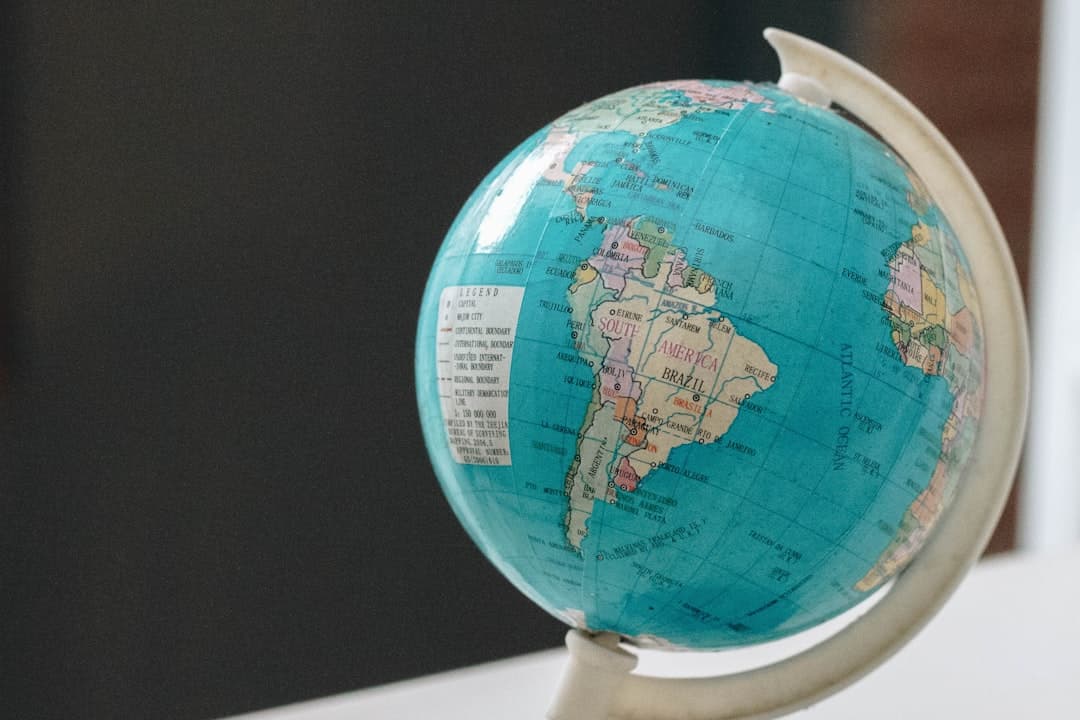
South America sits atop an extraordinary concentration of natural resources that have become central to the global economy and to national security calculations in Washington, Beijing, Brussels, and Moscow. The continent holds the largest known reserves of lithium — a mineral essential to electric vehicle batteries and energy storage systems — concentrated largely in the so-called Lithium Triangle spanning Argentina, Bolivia, and Chile.
Resources Driving External Interest
Beyond lithium, the Amazon basin represents a significant share of the planet's remaining freshwater and biodiversity. Brazil alone accounts for a substantial portion of global soy and beef exports, making South American agricultural output a lever in international food security discussions. Venezuela retains some of the world's largest proven oil reserves, while Guyana has emerged as a notable new producer following major offshore discoveries in recent years.
Competing Powers, Competing Visions
China has grown into a dominant trading partner across the region, financing infrastructure projects through state-backed loans and institutions as part of its Belt and Road Initiative expansion. The United States has historically maintained strong diplomatic and military ties with several South American governments, and has sought to reinforce those relationships amid growing Chinese economic presence. The European Union, for its part, has pursued a long-negotiated trade agreement with Mercosur — the regional bloc comprising Brazil, Argentina, Uruguay, and Paraguay — with the aim of securing supply chains and broadening market access.
Political Complexity as a Variable
The region's governments span a wide ideological range, from left-leaning administrations in countries such as Brazil, Colombia, and Chile to more market-oriented governments elsewhere. This political diversity means that no single external power maintains uniform influence across the continent, and that regional consensus on major international questions remains difficult to achieve.
South American nations have also shown a pattern of strategic ambiguity, maintaining ties with multiple competing powers simultaneously — a posture that reflects both economic pragmatism and a tradition of non-alignment dating to the Cold War era.
Open Questions
How will resource nationalism shape foreign investment terms in lithium-producing nations? Can Mercosur members finalize and ratify a trade deal with the European Union? And as geopolitical blocs harden elsewhere, will South American states be pressured to choose sides more explicitly?
Sources: International Energy Agency (IEA), World Trade Organization (WTO), U.S. Geological Survey (USGS), European Commission trade policy documents, United Nations ECLAC regional reports.
This article was compiled with the support of advanced research technology, based on multiple verified sources, and reviewed by our editorial team.