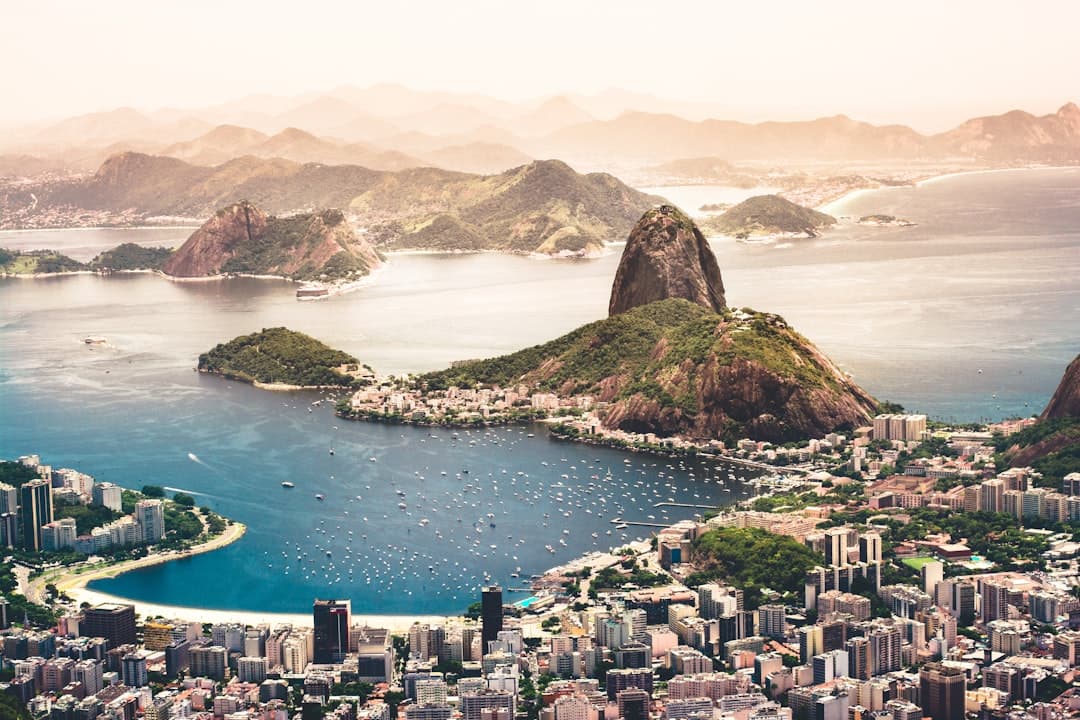
Rio de Janeiro remains the flagship of Brazilian tourism on the world stage, consistently appearing among the most searched and visited destinations in the Western Hemisphere. The city's iconic geography — framed by Guanabara Bay, the Atlantic coastline, and the Serra do Mar mountain range — provides a visual identity that few urban destinations can match.
A Convergence of Natural and Cultural Assets
The city holds several landmarks of international recognition, including the Cristo Redentor statue atop Corcovado mountain and the Pão de Açúcar formation, both of which attract visitors year-round. Copacabana and Ipanema beaches further contribute to the city's global brand, functioning as symbols of Brazilian coastal culture that circulate widely in international media.
Rio de Janeiro also serves as a gateway to broader Brazilian tourism circuits. Travelers who enter the country through the city frequently extend their itineraries to include other regions, including the Amazon basin, the Pantanal wetlands, and the historic cities of Minas Gerais.
Infrastructure and Connectivity
The city operates two major airports — Galeão International Airport and Santos Dumont Airport — maintaining direct flight connections to major hubs in Europe, North America, and across Latin America. This connectivity positions Rio as the primary entry point for intercontinental travelers arriving in Brazil.
The hospitality sector in Rio has expanded significantly over recent decades, with international hotel chains and boutique properties concentrated in the South Zone neighborhoods and the port district revitalized ahead of the 2016 Olympic Games.
Broader Implications for Brazilian Tourism
Brazil's tourism authority, Embratur, has historically centered international promotional campaigns around Rio de Janeiro's imagery, a strategy that reflects the city's measurable impact on national tourism revenue. As global travel demand continues to recover and grow following pandemic-era disruptions, Rio's position as Brazil's most marketable city abroad appears firmly established.
Open Questions
Whether secondary Brazilian destinations — such as Florianópolis, Recife, or Manaus — can develop comparable international profiles without relying on Rio's established brand remains an ongoing discussion among regional tourism planners.
Sources: Embratur (Brazilian Tourism Authority), UNESCO World Heritage records, ANAC (Brazilian Civil Aviation Authority), Rio de Janeiro State Tourism Secretariat
This article was compiled with the support of advanced research technology, based on multiple verified sources, and reviewed by our editorial team.