La Paz sits at an elevation exceeding 3,600 meters above sea level in the Bolivian Andes, making it one of the highest-elevation capital cities on Earth. That geographic distinction, long a challenge for first-time visitors adjusting to lower oxygen levels, has increasingly become a draw for travelers seeking high-altitude experiences.
A City Built on Elevation
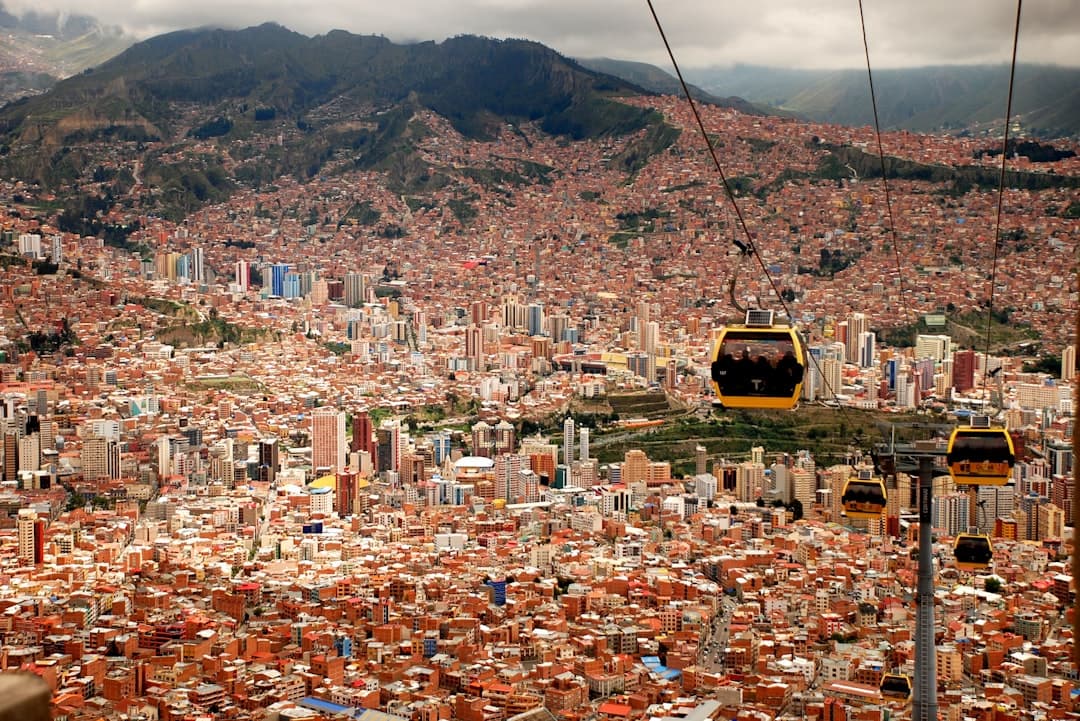
The city's dramatic topography — a deep canyon surrounded by the altiplano plateau — gives La Paz a physical character found nowhere else in the region. The Mi Teleférico cable car system, one of the most extensive urban aerial transit networks in the world, connects La Paz with the neighboring city of El Alto and offers passengers sweeping views of the surrounding Andean landscape. The system has drawn attention both as a functional transit solution and as a tourism attraction in its own right.
Gateway to Natural and Cultural Landmarks
La Paz serves as a logistical hub for access to several well-documented destinations. Lake Titicaca, the world's highest navigable lake, lies roughly 70 kilometers from the city. The Valle de la Luna, a terrain of eroded clay formations on the city's outskirts, attracts visitors seeking unusual geological landscapes. The nearby Yungas Road — historically documented as one of the world's most dangerous mountain routes — has been repurposed in large part as a destination for mountain biking tourism.
Infrastructure and Regional Connectivity
El Alto International Airport, which serves La Paz, operates at an elevation that ranks among the highest commercial airports globally. The airport connects Bolivia to major South American hubs, facilitating access for international visitors. Investment in hospitality infrastructure within La Paz has expanded over recent years, with lodging options ranging from budget accommodations in the historic center to higher-end properties in districts such as Sopocachi and Zona Sur.
The combination of accessible air links, cultural heritage tied to indigenous Aymara and Quechua traditions, and proximity to natural landmarks continues to support La Paz's profile as a destination with a distinct identity within South American travel circuits.
Open Questions
Whether sustained infrastructure investment will keep pace with growing visitor numbers, and how altitude-related health considerations will factor into tourism promotion strategies, remain subjects for ongoing observation.
Sources: Bolivia's Ministerio de Culturas y Turismo, Mi Teleférico official communications, UNESCO World Heritage documentation, general geographic and aviation reference data.
This article was compiled with the support of advanced research technology, based on multiple verified sources, and reviewed by our editorial team.