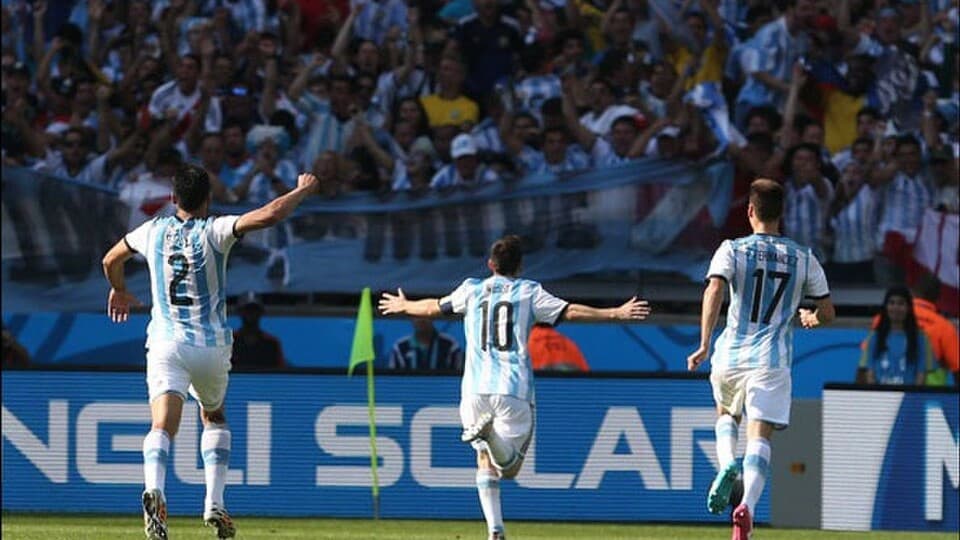
Lionel Messi's career with the Argentine national team, known widely as La Selección, has entered a phase that few athletes in any sport reach: a sustained late-career peak supported by a cohesive squad capable of converting individual brilliance into collective results.
A Career Trajectory Unlike Most
Messi, who lifted the FIFA World Cup trophy with Argentina at the 2022 tournament in Qatar, has continued to accumulate records at both club and international level. His tally of international goals and assists places him among the most productive players in the history of the sport. The Copa América title Argentina claimed in 2021, held in Brazil, ended a long drought of major international trophies for the country and marked a turning point in the narrative surrounding Messi's legacy with the national side.
Messi's ability to perform under pressure, deliver in knockout rounds, and maintain physical output across a career spanning more than two decades has drawn consistent attention from analysts, coaches, and football historians. His transition to Inter Miami in Major League Soccer has done little to diminish his influence on the international stage, where he continues to be called upon by Argentina head coach Lionel Scaloni.
Scaloni's System: A Framework Built for Results
The role of coach Lionel Scaloni in constructing a functional team around Messi deserves attention. Since taking charge of the national team, Scaloni has implemented a tactical structure that balances defensive solidity with fluid attacking transitions. The system allows Messi creative freedom while distributing responsibility across the squad, reducing reliance on any single performer.
Players such as Rodrigo De Paul, Alexis Mac Allister, and Julián Álvarez have emerged as consistent contributors, forming a midfield and forward line capable of functioning even when Messi is marked heavily or rotated. This depth has transformed Argentina from a team that once appeared dependent on Messi's heroics into one with multiple avenues to goal and resilience in difficult matches.
Argentina's Standing in South American Football
Argentina currently holds the FIFA World Cup title and has demonstrated consistent form in CONMEBOL competition. The national team's record in competitive matches under Scaloni reflects a winning percentage that places them among the top-performing sides globally. Their recent Copa América defense, won on United States soil in 2024, reinforced the continuity of the current generation.
South American football in general has seen a resurgence of competitive balance, with Brazil, Uruguay, and Colombia also fielding strong squads. Within this context, Argentina's ability to maintain dominance speaks to organizational stability within the Argentine Football Association, known by its Spanish initials AFA, and to the sustained quality of players emerging from Argentine club football.
What Messi Represents Beyond Statistics
Beyond measurable outputs, Messi's ongoing presence in the national team carries symbolic weight for Argentine football culture. His decision to continue representing the country after years of criticism and early tournament exits has been widely documented. The shift in public perception — from a player scrutinized for not replicating his club form internationally to one celebrated as the architect of a World Cup victory — represents one of the more significant transformations in modern football history.
As the next FIFA World Cup, scheduled for 2026 and jointly hosted by the United States, Canada, and Mexico, approaches, speculation around Messi's continued participation has grown. His age and physical condition will be subjects of ongoing assessment, but his current form gives no clear indication of an imminent decline.
Open Questions
Will Messi participate in the 2026 FIFA World Cup, and if so, in what capacity? How will Argentina manage the transition to a post-Messi era whenever it arrives? Can the current squad sustain its level against increasingly competitive CONMEBOL opposition?
This article was compiled with the support of advanced research technology, based on multiple verified sources, and reviewed by our editorial team.
Sources: FIFA official records, CONMEBOL competition archives, AFA official communications, general sports reporting from Reuters and Associated Press.